
Variable Frequency Drives (VFDs) serve as the core equipment of modern industrial automation, widely deployed in mining, power generation, water treatment, petrochemical, and metallurgical industries. Whether it is standard low-voltage inverters or heavy-duty medium-voltage VFDs, long-term continuous operation, harsh industrial site conditions, and non-standard operating habits will inevitably trigger various minor faults and frequent tripping issues.
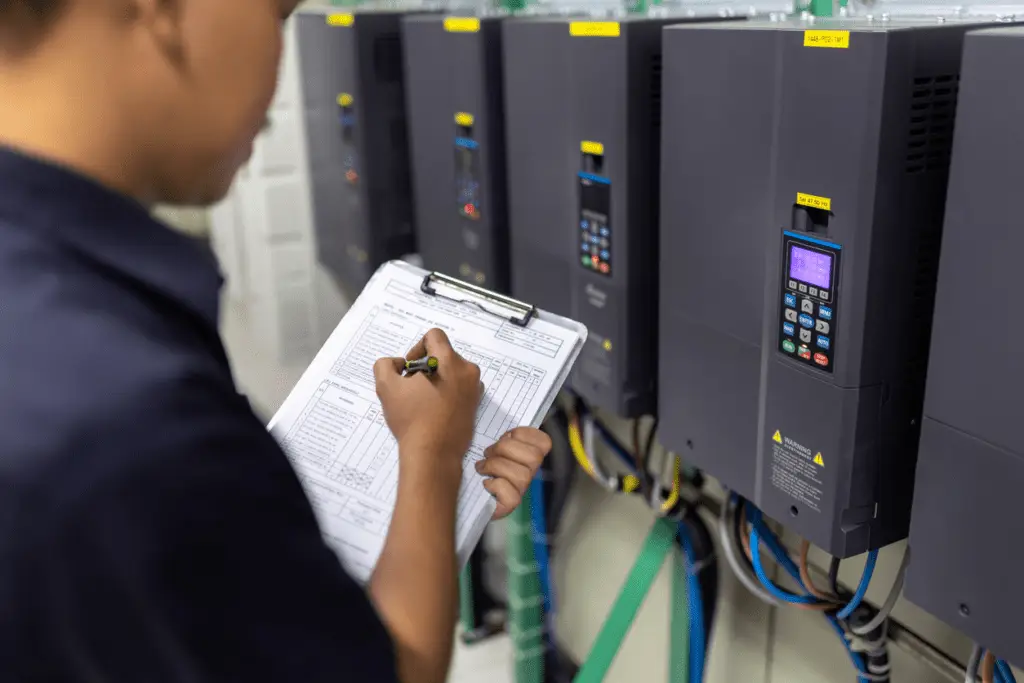
In most industrial scenarios, VFD equipment failures are rarely caused by inherent product quality defects. Instead, they mainly stem from improper daily operation, insufficient regular maintenance, and unreasonable parameter configuration. Proficiency in standard VFD troubleshooting skills enables factory maintenance engineers to quickly locate faults, eliminate potential safety hazards, avoid costly long-term production shutdowns, and effectively extend the service life of industrial inverters.
1. VFD Overcurrent Fault (OC) | Most Common On-Site Industrial Failure
Overcurrent fault is the most frequent issue in daily VFD operation and maintenance, commonly occurring during equipment startup, high-speed operation, or sudden load changes. Most on-site operators simply restart the VFD after tripping, yet repeated overcurrent alarms will burn power modules and cause irreversible permanent damage to the inverter without fundamental solutions.
Main Causes of VFD Overcurrent Faults
Motor and mechanical load failures: Stuck fan blades, blocked pump impellers, damaged motor bearings, and rotor jams lead to instantaneous load surges and startup overcurrent. For heavy-load equipment such as mining conveyors and crushers with high starting resistance, insufficient VFD starting torque will generate severe instantaneous current impact and trigger overcurrent protection.
Incorrect parameter settings: Improper acceleration and deceleration time is a leading human-induced cause of overcurrent faults. If the acceleration time is set too short, the VFD output frequency rises rapidly while the motor speed fails to keep up, resulting in excessive motor slip and instantaneous current spikes. This issue is prevalent in new equipment commissioning and daily parameter adjustment.
Internal VFD hardware failures: Aging power switching devices, damaged drive boards, and short-circuited output terminals will cause continuous overcurrent alarms. For medium and high-voltage three-level VFDs, unbalanced DC bus capacitor voltage will lead to phase current deviation and further activate overcurrent protection.
Practical Overcurrent Troubleshooting Steps
Disconnect the motor load first to test VFD no-load operation. If the VFD runs normally without load, the fault originates from the motor or mechanical system; inspect for mechanical jamming and damaged motor insulation. If overcurrent persists under no-load conditions, check internal circuits and power modules. Optimize parameters by extending acceleration/deceleration time and increasing torque compensation value for heavy-load startup scenarios to eliminate startup overcurrent.
2. VFD Overheating Fault (OH) | Harsh Environment-Induced Thermal Failure
Industrial VFDs, especially heavy-duty medium-voltage models, generate substantial heat during long-term full-load operation. Overheating fault is a typical failure in high-temperature, dusty, and poorly ventilated factory workshops. Sustained overheating reduces module operating efficiency, accelerates internal component aging, and may cause emergency shutdown or permanent equipment burnout in severe cases.
Main Causes of VFD Overheating
Poor heat dissipation is the primary culprit. Floating dust, fiber debris, and mineral particles in industrial sites accumulate on VFD radiators and cooling fan blades over time, blocking heat dissipation channels. Neglected regular dust cleaning leads to trapped heat and rapid internal temperature rise, triggering overheating protection.
Additionally, damaged cooling fans, insufficient on-site ventilation, high ambient temperature, and humid operating environments (such as outdoor closed cabinets and underground mining tunnels) further degrade heat dissipation efficiency. Long-term VFD overload operation also causes continuous heat accumulation beyond the equipment’s heat dissipation capacity.
Practical Overheating Troubleshooting Steps
Power off the equipment regularly and thoroughly clean radiators and fan dust with compressed air. Inspect cooling fan operation and replace faulty fans timely. Optimize on-site ventilation conditions, avoiding direct sunlight and fully enclosed installation. For continuously overloaded equipment, adjust the load margin appropriately or upgrade to a high-power VFD matching actual working conditions.
3. Overvoltage & Undervoltage Fault (OV/UV) | Power Grid Fluctuation Failures
Unstable power grids in old industrial parks, remote mining areas, and temporary construction sites frequently cause VFD overvoltage and undervoltage tripping. Many maintenance engineers overlook grid quality issues during troubleshooting, leading to recurring faults that cannot be completely resolved.
Fault Causes & Scenarios
Overvoltage faults mainly occur during deceleration and shutdown. High-inertia equipment such as large fans and centrifugal pumps generates regenerative electric energy via inertial operation, which feeds back to the VFD DC bus and causes instantaneous voltage surges. Grid voltage spikes and lightning induction can also trigger overvoltage protection.
Undervoltage faults result from insufficient grid voltage, loose power wiring, and poor circuit contact. Simultaneous startup of multiple high-power devices causes sharp grid load increases and voltage drops. Long-term loose terminal connections lead to VFD input voltage deviation, causing undervoltage alarms and abnormal startup failure.
Practical OV/UV Troubleshooting Steps
Extend deceleration time for high-inertia loads or install braking units and resistors to eliminate deceleration overvoltage. Regularly tighten input power terminals to ensure stable contact. For sites with severe grid fluctuations, install reactors and voltage stabilizers to improve grid adaptability. For frequent deceleration working conditions, adopt four-quadrant VFDs to realize energy feedback and avoid overvoltage tripping.
4. VFD Normal Display but No Output | Motor Failure to Rotate
A common hidden VFD fault in daily operation is normal panel display with no error codes, yet the motor fails to start with zero power output. This fault is easily misjudged as normal equipment status, resulting in delayed production and hidden equipment risks.
Main Fault Causes
Common triggers include mismatched operating parameters, broken start signal lines, and incorrect terminal control modes. Most on-site errors occur when the VFD frequency and control source are set to panel control, while operators use external terminal start signals, leading to startup failure. Other causes include abnormal motor wiring, three-phase phase loss, and broken output cables.
Troubleshooting Solutions
Verify VFD parameter configuration to ensure consistent frequency source and control mode. Test the normality of external start-stop signals and inspect output cables and motor wiring for open circuits and phase loss. Reset factory settings and reconfigure matching operating parameters if parameter disorder occurs.
5. Abnormal Noise & Vibration During VFD Operation
Electromagnetic noise and mechanical vibration are common minor VFD operating faults. Long-term unaddressed abnormal vibration will loosen internal components and wiring terminals, inducing major equipment failures and downtime. Abnormal noise and vibration mainly stem from unreasonable carrier frequency settings, unbalanced three-phase output, and mechanical resonance between the motor and load equipment.
Excessively low carrier frequency causes obvious electromagnetic howling, while overly high carrier frequency increases module loss and triggers overheating. Fixed-frequency operation may also lead to on-site mechanical resonance and continuous vibration. Adjust the VFD carrier frequency reasonably and avoid equipment resonance frequency bands to eliminate noise and vibration effectively.
6. Essential Daily VFD Maintenance Tips to Reduce Fault Rate
Most VFD operating faults are preventable through standardized daily maintenance. For industrial frequency conversion equipment, regular standardized inspection is far more critical than post-fault troubleshooting.
- Regular dust and pollution cleaning: Dust and oil contamination are the top causes of VFD damage. Clean radiators, cooling fans, and internal circuit boards monthly to ensure unobstructed heat dissipation.
- Periodic wiring inspection: Long-term equipment vibration loosens power terminals and control lines. Regular tightening prevents poor contact and circuit failure.
- Avoid overload and low-frequency long-term operation: Match load parameters with actual working conditions to reduce unnecessary equipment loss and component aging.
- Maintain dry and ventilated installation environment: Prevent internal moisture, corrosion, and circuit board short circuits caused by humid and harsh working conditions.
Conclusion
Industrial VFD faults follow regular patterns and can be effectively predicted and prevented. Mastering systematic VFD troubleshooting methods allows maintenance teams to quickly diagnose and resolve common issues including overcurrent, overheating, grid voltage abnormality, and no-output failures. Standardized daily maintenance and scientific parameter configuration are the core keys to reducing VFD failure rates and extending equipment service life.
SUNSIN Industrial Three-Level VFDs are integrated with full-featured intelligent protection mechanisms and independent fault self-diagnosis systems, supporting accurate real-time feedback of fault codes and complete operating data. We provide global industrial users with professional full-cycle after-sales technical guidance and fast remote troubleshooting support, ensuring long-term stable, safe, and efficient operation of industrial frequency conversion equipment.