
VFD common faults are one of the leading causes of unplanned downtime in modern industrial production. Industrial variable frequency drives, especially heavy-duty medium voltage drive systems, act as core control equipment for mining, power, marine and petrochemical production lines. In daily on-site operation, these devices frequently encounter typical issues including unexpected tripping, overheating alarms, current fluctuation and abnormal running noise. These minor but recurring problems easily disrupt continuous production and cause unnecessary economic losses for industrial enterprises.
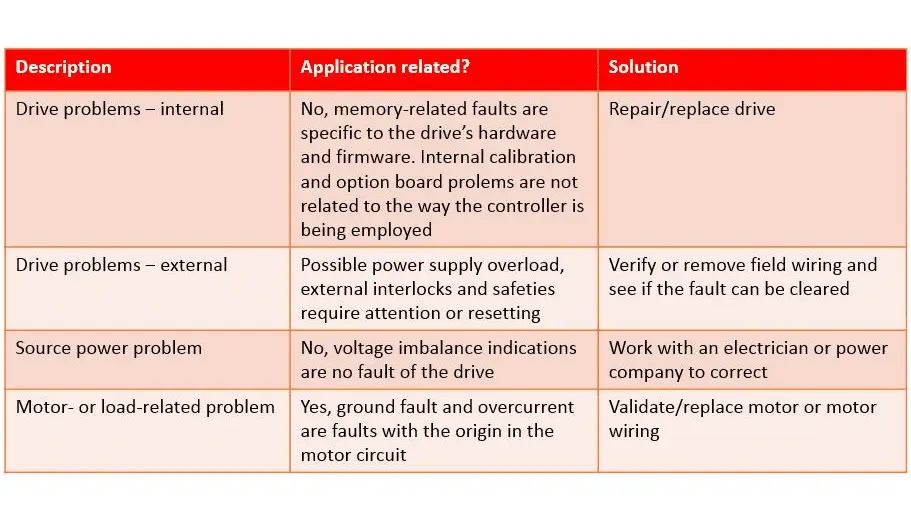
Most on-site maintenance teams adopt passive troubleshooting methods, only dealing with failures after tripping occurs, while ignoring standardized daily inspection and preventive maintenance. Industry practice proves that more than 80% of common VFD failures can be avoided through regular equipment cleaning, accurate parameter calibration and reasonable environmental optimization.
1. Most Common VFD Faults & Practical Troubleshooting Solutions
Different from laboratory test environments, industrial sites feature heavy load impact, dusty air, humid temperature and unstable power grids. These complex conditions lead to targeted failure types for industrial-grade VFDs.
1.1 Overcurrent Fault (OC) – The Highest-Frequency Trip Fault
Overcurrent fault is the most common problem in industrial VFD operation. Many operators simply reset and restart the drive after tripping, but repeated overcurrent will burn power modules and damage internal circuits over time. This fault mainly occurs during startup, sudden load change and heavy-load acceleration.
The main on-site causes include mechanical jamming of motors and loads, unreasonable acceleration time settings, aging motor insulation, and instantaneous load surge of mining conveyors or crushers. For medium voltage three-level VFDs, unbalanced current output caused by DC capacitor voltage deviation can also trigger overcurrent protection.
Troubleshooting Steps: First, separate the VFD from the motor for no-load test. If the no-load operation is normal, the fault comes from mechanical blockage or motor failure. Clean stuck equipment, check motor winding insulation and replace aging motors. If the fault still exists under no-load state, check internal power devices and drive boards. Appropriately extend acceleration time and increase torque compensation for heavy-load startup scenarios to avoid instantaneous current surge.
1.2 Overheating Fault (OH) – Mainly Caused by Poor Heat Dissipation
Industrial VFDs operate continuously under full load for a long time, generating massive heat. In high-dust mining workshops and humid chemical plants, heat dissipation blockage easily causes VFD overheating faults. Long-term overheating will accelerate component aging, reduce operating efficiency and even trigger shutdown protection.
Many enterprises ignore regular dust cleaning, resulting in accumulated dust covering heat dissipation fins and failing to discharge internal heat in time. In addition, long-term overload operation will also cause continuous heat accumulation.
Troubleshooting Steps: Cut off the power completely and use dry compressed air to clean radiator dust and fan impurities. Manually check whether the cooling fan rotates smoothly and replace stuck or aging fans in time. Optimize cabinet ventilation, avoid closed installation and high-temperature radiation. For long-term overload equipment, reserve reasonable load margin to ensure stable heat dissipation.
1.3 Overvoltage & Undervoltage Fault (OV/UV) – Grid Fluctuation Problems
Overvoltage faults mostly occur during equipment deceleration and shutdown, while undervoltage faults often appear during high-power equipment startup.
High-inertia equipment such as large fans and water pumps will generate reverse current during rapid deceleration, accumulating on the DC bus and causing voltage surge. Undervoltage faults result from loose power wiring, poor grid capacity and simultaneous startup of multiple high-power devices.
Troubleshooting Steps: Extend deceleration time to ease voltage surge. For frequent braking scenarios, adopt four-quadrant VFD to realize energy feedback and eliminate overvoltage fundamentally. Regularly check and fasten power terminal wiring to avoid poor contact. Install grid reactors for sites with severe voltage fluctuation to improve power grid adaptability.
1.4 Abnormal Noise & Vibration
Electromagnetic howling and mechanical vibration are common minor faults in daily operation. Long-term vibration will loosen internal wiring and components, inducing short circuits and signal failure.
Too low carrier frequency leads to obvious electromagnetic noise, while too high carrier frequency increases module loss. Resonance between motor operating frequency and mechanical structure will also produce continuous vibration. Timely parameter adjustment and structural fixing can completely solve this problem.
2. Standard Daily Maintenance Checklist for Industrial VFDs
Scientific maintenance can effectively extend the service life ofmedium voltage drive equipment, reduce failure rate and save long-term replacement costs. The following inspection standards are suitable for all industrial three-level VFDs and heavy-duty frequency conversion equipment.
2.1 Daily Visual Inspection
Check the VFD operating status every day, observe whether the display screen has abnormal fault codes, check whether the cooling fan runs normally, and confirm that there is no abnormal noise, vibration or peculiar smell during operation. Monitor operating current and voltage data to ensure no obvious fluctuation beyond the standard range.
2.2 Weekly Dust Cleaning
Dust and oil pollution are the biggest killers of industrial VFDs. Especially in mining and metallurgical industries, floating dust will adhere to radiators and circuit boards, affecting heat dissipation and causing short circuits. Use dry compressed air to clean the cabinet interior, radiator and fan blades every week to keep the equipment clean and unobstructed.
2.3 Monthly Wiring & Parameter Inspection
Long-term mechanical vibration will loosen power terminals and control signal lines. Regularly check the tightness of all wiring terminals to avoid poor contact and voltage drop. Back up VFD operating parameters every month to prevent parameter loss or disorder caused by accidental power failure.
2.4 Quarterly Performance Test
Regularly test motor insulation, three-phase current balance and equipment overload performance. For long-term continuous operating equipment, conduct no-load and load operation tests to check whether the protection functions such as overcurrent and overheating are effective, ensuring stable equipment performance.
3. Long-Term Maintenance Rules to Extend VFD Service Life
Industrial medium and high voltage VFDs belong to high-precision power electronic equipment, with a service life of more than 10 years under standardized maintenance. Reasonable operating habits and environmental maintenance can maximize equipment stability.
First, avoid long-term low-frequency and overload operation. Long-term low-frequency operation will cause insufficient heat dissipation of the motor, and long-term overload will accelerate module aging. Second, keep the installation environment dry and ventilated to avoid moisture and corrosive gas erosion. Third, avoid frequent startup and shutdown, which will reduce the service life of power devices.
4. Common Maintenance Misunderstandings on Site
Many equipment failures are caused by irregular maintenance operations. The first misunderstanding is only troubleshooting without daily prevention, resulting in repeated faults. The second misunderstanding is blind reset after tripping without finding the root cause, which will aggravate internal device damage. The third misunderstanding is ignoring dust cleaning and terminal inspection, leading to hidden dangers of equipment aging.
Scientific VFD maintenance is based on prevention rather than remedy. Standardized daily inspection can eliminate most hidden dangers in advance and ensure long-term stable operation of industrial frequency conversion systems.
Conclusion
Most VFD common faults in industrial sites are regular and predictable. Complete VFD daily maintenance guide and standardized inspection habits are the core to reduce failure rate, extend equipment life and ensure stable production.
With strict factory testing and reliable industrial-grade performance, our VFDs adapt to harsh industrial working conditions. We provide professional remote guidance and on-site technical support to help global users solve VFD faults efficiently and achieve stable and low-consumption equipment operation.