
Large‑scale industrial operations across mining, water treatment, oil and gas, power generation and heavy manufacturing rely on variable‑speed motor systems to run fans, pumps, conveyors, compressors and hoist equipment. When motor power climbs beyond low‑voltage drive capacity, project engineering teams face a fundamental decision: implement medium‑voltage (MV) drives or invest in high‑voltage (HV) drive systems.
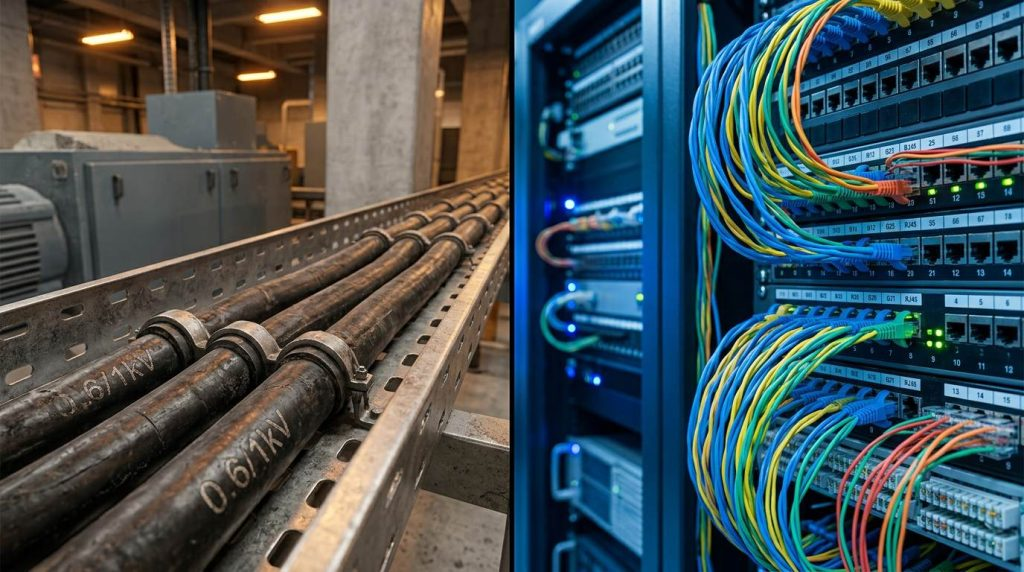
Many procurement and design professionals find this choice confusing. On the surface, MV and HV drives both deliver variable‑speed control for high‑power AC motors, improve energy efficiency and protect rotating machinery from harsh startup current shocks. However, there are meaningful gaps in hardware architecture, installation footprint, capital expenditure, operational risks, maintenance demands and ideal working scenarios. Picking the wrong drive class can lead to over‑budget investment, wasted floor space, ongoing grid compatibility headaches, or performance bottlenecks that limit plant throughput for decades.
What Are MV Drives and HV Drives?
Before jumping into direct comparison, it helps to clarify industry‑accepted voltage definitions used within heavy‑duty variable‑frequency drive markets. Industry standards generally classify Medium‑Voltage (MV) drives for motor operating voltages ranging from 2.3 kV up to 6.6 kV. High‑Voltage (HV) drives typically cover 10 kV and above motor and supply‑voltage levels. These drives serve high‑power motors that cannot be economically handled by standard low‑voltage VFDs, which are usually capped below 690 V.
Medium‑Voltage (MV) Drives
MV drives are built for heavy‑industry motors operating at 3kV, 3.3kV, 4.16kV, 6kV or 6.6kV power ratings. Most modern MV drive cabinets adopt multi‑level cell‑stack topology, also known as cascaded H‑bridge design. This modular construction stacks multiple low‑power power cells in series to build up the target output voltage. One major practical advantage of cell‑based MV drive hardware is excellent output waveform quality, producing low total harmonic distortion without requiring large‑size output filters in many installations.
MV drive systems are widely packaged as integrated cabinet assemblies, containing power cells, control units, cooling fans, protection relays and human‑machine interface panels inside one or multiple adjacent enclosures. They support a broad power spectrum, commonly covering several hundred kilowatts up to around 15 MW. Modular power‑cell design enables partial redundancy: in certain designs, a single damaged power cell can be bypassed temporarily so the system can keep running at reduced capacity instead of triggering full‑unit shutdown. This feature improves uptime for production‑critical machinery.
High‑Voltage (HV) Drives
HV drives handle motor voltages starting at 10 kV and extend to higher voltage classes for ultra‑large‑power rotating equipment. HV drive topologies use high‑rated power semiconductors capable of enduring extreme voltage stress. Because of elevated working voltage levels, insulation design becomes a core engineering focus for every cabinet, busbar and internal component. Clearance distances between live parts must strictly follow high‑voltage safety standards.
HV drive hardware targets ultra‑high‑power applications, frequently above 10 MW and scaling up to tens of megawatts. The physical footprint of HV drive cabinets is substantial, and installation sites must satisfy strict safety zoning requirements. HV systems often require dedicated high‑voltage switchgear, special transformers and enhanced room insulation protection. Maintenance work on HV drives demands certified high‑voltage qualified technicians, with strict lock‑out‑tag‑out safety procedures for every service intervention.
MV Drives vs HV Drives: Head‑to‑Head Practical Comparison
Project teams need to assess multiple dimensions when weighing MV and HV drive options, including voltage & power range, footprint, capital cost, grid interface, maintenance requirements, safety rules and motor compatibility.
表格
| Comparison Item | Medium‑Voltage (MV) Drives | High‑Voltage (HV) Drives |
|---|---|---|
| Typical Operating Voltage | 2.3 kV‑6.6 kV | 10 kV and above |
| Common Power Coverage | 200 kW‑15 MW | 10 MW‑50 MW+ |
| Cabinet Footprint | Moderate; modular multi‑cabinet layout | Large; requires more floor space & safety clearance |
| Upfront CAPEX | Lower for mid‑range high‑power projects | Significantly higher; includes HV switchgear & transformer hardware |
| Harmonic Performance | Excellent with cascaded H‑bridge topology, minimal filtering needs | Needs careful input‑output filter configuration to manage harmonics |
| Motor Compatibility | Works with widely‑available standard MV industrial motors | Requires purpose‑built HV‑rated motors; spare‑part availability is more limited |
| Maintenance Skill Requirement | Industrial electrical technicians with MV training | Must have certified high‑voltage qualified personnel |
| Safety Management | Standard medium‑voltage safety protocols | Strict HV safety zoning, interlocks, lock‑out‑tag‑out mandatory |
| Cable Requirements | Medium‑grade power cables, easier procurement | Special high‑voltage shielded power cables, higher material & laying cost |
Capital and Operating Cost Differences
MV drives deliver clear cost advantages for mid‑range high‑power projects. The transformers, switchgear, power cables and matching MV motors are mass‑produced industrial components, easy to source globally at competitive pricing. Spare power‑cell stocks are compact and can be stored on‑site for fast replacement, cutting downtime during equipment faults.
HV drive projects carry heavy total‑cost‑of‑ownership burdens beyond just the drive unit itself. You need dedicated high‑voltage switchgear, special step‑up or step‑down transformers, HV‑rated cables and custom‑built HV motors. Component lead times are generally longer. Spare parts are expensive and often cannot be kept in local site inventory. Every planned maintenance task involves certified HV technicians, increasing service‑contract expenses year after year.
Footprint and Site Layout Constraints
MV integrated drive cabinets can fit inside standard‑sized electrical rooms, provided basic ventilation and cooling provisions are implemented. Many retrofit projects in existing factories, mining plants and water pumping stations can accommodate MV drive assemblies without major building reconstruction.
HV drive installations impose rigid spatial constraints. Internal components need large air clearances for high‑voltage insulation. Electrical rooms must be enlarged or purpose‑built. Safety barriers, access interlocks and warning systems become mandatory design items. For brown‑field retrofit projects where building space is already limited, fitting HV‑grade hardware often proves impractical or prohibitively expensive.
Grid Compatibility and Power‑Quality Behaviour
Cascaded H‑bridge MV drives produce clean output voltage waveforms. For most sites, THD stays well within IEC and IEEE‑519 power‑quality specifications without bulky additional filter hardware. This reduces interference with nearby sensors, PLC systems and other plant automation devices.
HV drives generate more complex grid‑side harmonic profiles. Engineering teams need to conduct detailed grid‑quality studies before installation. Input transformers, multi‑pulse rectifier configurations and filter banks are frequently required to mitigate harmonic pollution. Sites with weak utility grids face extra challenges when deploying large‑size HV drive systems.
Where Medium‑Voltage (MV) Drives Are the Right Fit
MV drives represent the default solution for most heavy‑industry high‑power projects today. You should prioritise MV drive solutions under these real‑world scenarios.
Mid‑range high‑power motor applications (200 kW‑15 MW)
MV drives are ideal for large‑size industrial fans, main water‑pump sets, mine conveyors, ball mill auxiliary drives and medium‑capacity mine hoists. These loads fall perfectly within MV power envelopes, and matching MV motors are widely available across global suppliers. Most mining, metallurgy and municipal water‑plant expansion projects select MV drive cabinets for this exact reason.
Brown‑field retrofit and upgrade projects
When updating existing plant equipment within old‑build facilities, space is usually constrained. MV drive cabinets can replace older fluid couplings, direct‑on‑line starters or outdated MV drive hardware without massive civil construction work. Existing site MV power infrastructure, transformers and motor assets can often be reused, holding overall project costs under control.
Projects prioritising easy maintenance and fast fault recovery
For sites located in remote industrial zones, fast equipment recovery directly impacts production output. Modular MV drives allow faulty power cells to be swapped out by trained site electrical staff. Holding a small stock of spare power‑cell modules minimises production downtime. Projects that cannot accept multi‑week waits for specialist HV service teams strongly benefit from MV drive architecture.
Multiple distributed high‑power motor loads
Plants running several separate high‑power machines often standardise on MV voltage class. Using consistent MV‑level hardware simplifies spare‑part management, staff training and spare‑inventory setup across the whole facility.
When High‑Voltage (HV) Drives Make Practical Sense
HV drives are not a universal upgrade over MV technology. They only deliver tangible advantages under specific extreme‑power project conditions.
Ultra‑large‑power single‑motor loads above 15 MW
When a single motor unit operates at power levels beyond the practical upper limit of MV drive systems, HV drives become the realistic technical option. Typical examples include huge main compressors for large‑scale oil‑gas facilities, giant grinding mills in mega‑scale mineral‑processing plants, and large synchronous motor drives for heavy‑duty power‑plant auxiliary equipment. At these power magnitudes, running power at higher voltage reduces operating current, lowering power‑cable losses and conductor cross‑section requirements.
New‑build green‑field projects with purpose‑designed HV infrastructure
If your project is a complete green‑field site already planned around high‑voltage incoming utility supply, and HV‑rated motors are specified from initial design stage, HV drive integration becomes straightforward. The switchgear, transformers, cable routes and building layout are engineered for HV requirements from day one, removing retrofit‑related pain points.
Long‑distance power transmission between drive unit and motor
For cases where the drive cabinet sits far away from the large‑power motor, higher operating voltage cuts working current. This reduces resistive losses along lengthy power‑cable runs and lowers cable sizing costs. This scenario is more common for certain remote processing plant layouts.
Critical Risk Points to Avoid During Drive Selection
Engineering teams frequently make avoidable mistakes when choosing between MV and HV drives for industrial projects.
First, do not select HV drives simply because “higher voltage sounds more powerful”. Many projects over‑specify HV hardware when MV drives can fully satisfy motor‑power requirements. This decision inflates total project budget, extends delivery timelines and creates long‑term maintenance burdens that last over the equipment 15‑20‑year service lifetime. Always start with motor nameplate power and voltage data rather than chasing higher voltage classes.
Second, do not overlook existing site power infrastructure. Check your site’s available incoming transformer voltage classes, existing switchgear capacity and installed motor base. Switching from established MV infrastructure to HV means replacing far more equipment than just the variable‑frequency drive itself.
Third, assess local maintenance capability ahead of purchase. If your region lacks easily accessible HV‑certified service technicians, HV drive breakdowns may lead to extended unplanned outages. In such locations, MV drives are often the more robust business choice even if technical specifications appear borderline.
Fourth, run full total‑cost‑of‑ownership calculation instead of comparing only drive unit price tags. Include transformers, switchgear, cables, civil modification work, spare‑part inventory and annual service contract expenses in your comparison. HV systems often look comparable on drive‑unit price alone, but auxiliary hardware pushes overall project cost significantly higher.
Real‑World Project Examples
Example 1: Large municipal water pumping station
Project requirements: multiple 2 MW main water pumps, existing 6 kV site power network, brown‑field building with limited extra space. Decision: MV drives at 6 kV class. Existing transformers and motor specifications match perfectly. Cabinet dimensions fit within existing electrical building. Local electrical maintenance teams can handle routine service and power‑cell replacement. This is the most common real‑world MV deployment case.
Example 2: Mega‑mineral processing plant new‑build
Project requirements: single 22 MW grinding mill motor, purpose‑constructed green‑field site with planned 11 kV grid infrastructure. Decision: HV drive solution. The motor power exceeds standard MV drive upper power limits. Site layout, switchgear and building are engineered for HV conditions from design phase. HV‑level operation reduces cable current for this ultra‑high‑power single load.
Example 3: Mining conveyor upgrade
Project requirements: 8 MW inclined bulk conveyor, existing 3.3 kV installed motor, retrofitting inside existing control building. Decision: MV drive. Motor is already MV‑rated, building space cannot accommodate HV cabinet size and safety clearances. Modular MV drive supports on‑site cell bypass function to improve uptime for production‑critical conveyor operation.
Frequently Asked Questions
Q: Can an MV drive run an HV‑rated motor?
A: Direct operation is not possible. Motor insulation, winding structure and terminal design strictly correspond to their rated voltage. You need to match drive output voltage class exactly with motor nameplate voltage. Trying to mismatch voltage classes will lead to catastrophic insulation failure.
Q: Is HV drive always more energy‑efficient than MV drive?
A: No. Energy efficiency depends on power‑semiconductor topology, cooling system design and operating load point, not purely on voltage class. Well‑designed MV drives achieve comparable or even better efficiency under mid‑range high‑power operating conditions. Do not assume HV automatically delivers superior energy savings.
Q: Can I upgrade from MV drive to HV drive later if plant capacity expands?
A: This is rarely a simple upgrade. Shifting voltage class means replacing motors, transformers, switchgear, power cables and reworking electrical‑room civil layout. It counts as a major capital‑rebuild project rather than a minor hardware swap. Try to forecast future load expansion in your initial specification phase.
Conclusion
MV drives and HV drives both deliver variable‑speed control for high‑power industrial motors, yet they occupy clearly separate application territories.
Medium‑voltage drives are the workhorse for most modern heavy‑industry projects, covering 200 kW up to approximately 15 MW. They balance performance, footprint, capital cost, spare‑part availability and maintenance accessibility. MV systems shine for mid‑range high‑power fans, pumps, conveyors and hoists, especially for brown‑field retrofits and sites in remote locations where specialist high‑voltage support is hard to source.
High‑voltage drives are reserved for ultra‑large‑power single‑motor loads generally above 15 MW, green‑field sites built around pre‑planned HV infrastructure, or installations with extremely long motor‑cable routes. HV hardware brings higher upfront investment, stricter safety demands and more restrictive maintenance requirements that must be fully factored into project planning.