
Selecting a suitable medium voltage drive (MV VFD) is one of the most critical decisions for modern heavy industrial renovation and new project construction. Unlike low-voltage variable frequency drives used for general machinery, medium voltage drives operate at 2.3kV to 13.8kV, supporting high-power equipment from hundreds of kilowatts to tens of megawatts. They are widely deployed in mining, oil and gas, thermal power, metallurgy, and large water conservancy projects.
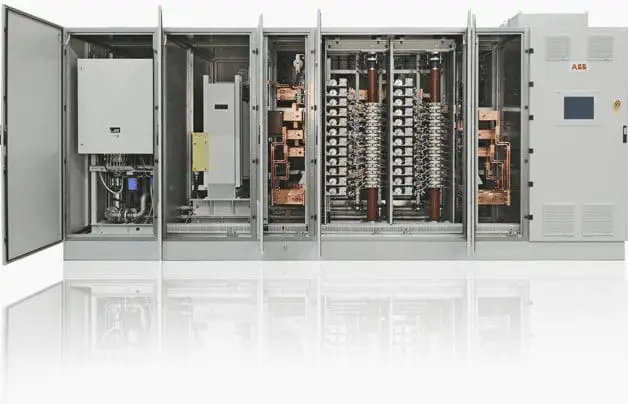
1. Confirm Actual On-Site Voltage and Power Parameters
The first step in medium voltage VFD selection is to lock in basic electrical parameters, which is the foundation of all subsequent configuration work. Many users simply select models according to motor nameplate power, which is prone to underpower or redundant configuration.
First, confirm the grid voltage level of the project site. Common industrial medium voltage grades include 3kV, 6kV, and 10kV. The rated voltage of the MV drive must strictly match the grid voltage. Any mismatch will lead to inability to start, severe voltage breakdown, or continuous harmonic oscillation of the power grid. For old factory renovation projects with unstable grid voltage, it is necessary to confirm the long-term voltage fluctuation range to reserve sufficient voltage tolerance for the drive.
Second, calculate the actual operating current of the motor rather than relying solely on the rated power. Heavy-load equipment such as mine crushers and large fans often operates with overload impact, and the actual operating current is higher than the nameplate current. When selecting a medium voltage inverter, reserve a 10% to 20% current margin to avoid frequent over-current protection during peak load periods. For long-term heavy-duty operation scenarios, priority should be given to current-based selection rather than power-based selection.
2. Distinguish Load Types and Working Conditions
Different industrial loads require completely different drive performance, which directly determines the selection of control mode, overload capacity and topological structure of the medium voltage drive. Industrial loads are mainly divided into two categories: variable torque loads and constant torque loads.
Variable torque loads include centrifugal fans and water pumps, which are the most common energy-saving transformation scenarios. This type of load has small starting impact and low overload demand. A standard three-level medium voltage drive can fully meet the operation requirements, with stable speed regulation and significant energy-saving benefits. For seasonal variable load scenarios, the drive needs to support long-term low-frequency stable operation to avoid low-speed overheating.
Constant torque loads such as mine conveyors, crushers, compressors and marine propulsion equipment belong to typical heavy-duty working conditions. These devices require large starting torque, frequent start-stop and impact load resistance. When selecting, users must choose heavy-duty customized industrial MV drives with 150% overload capacity for 60 seconds or even higher overload specifications. Ordinary standard drives are prone to stall and trip under frequent impact loads.
In addition, special working conditions such as high temperature, high humidity, dust pollution, and corrosive gas on site need to be fully considered. Outdoor open-air installation and underground mining environments require the drive to have high protection grade and strong environmental adaptability, and conventional indoor standard models cannot be used indiscriminately.
3. Choose Topology: Two-Level vs Three-Level MV Drive
Topology selection is the core technical link in medium voltage drive selection, which determines waveform quality, harmonic level and long-term operational stability. At present, mainstream industrial medium voltage VFDs are divided into two-level topology and three-level neutral point clamped (NPC) topology.
Traditional two-level medium voltage drives have simple structure and low cost, but they have obvious defects. The voltage jump is large during switching, resulting in high harmonic distortion rate, serious motor heating and large electromagnetic interference. They are only suitable for temporary equipment or low-demand industrial scenarios.
The three-level MV drive has become the mainstream choice for formal industrial projects. Its unique neutral point clamping structure outputs three-level voltage waveforms, which are closer to standard sine waves. The THD of the output current is greatly reduced, effectively protecting the motor and power grid. More importantly, each power device of the three-level drive only bears half of the bus voltage, which greatly reduces device voltage stress and failure rate, and is more suitable for long-term continuous operation of high-power heavy-duty equipment. For mining, petrochemical and power plant key equipment, three-level MV VFD is the most reliable and cost-effective choice in the whole life cycle.
4. Overload Capacity and Protection Function Matching
Industrial medium voltage equipment often faces unpredictable load fluctuations, so overload capacity and complete protection mechanisms are key indicators to measure the reliability of medium voltage inverters. Standard commercial drives usually support 120% overload for 60 seconds, while heavy-duty industrial drives need to reach 150% overload capacity to cope with instantaneous impact loads.
For equipment with frequent start-stop and forward-reverse switching, such as mining scraper conveyors, it is necessary to select a four-quadrant medium voltage drive. It can realize energy feedback during braking, not only avoiding voltage overvoltage trip, but also feeding redundant energy back to the grid, achieving secondary energy saving.
In terms of protection functions, qualified industrial MV drives must be equipped with perfect protection mechanisms including over-current, over-voltage, under-voltage, overheating, phase loss, short circuit and overload protection. For high-risk scenarios such as coal mines and chemical plants, explosion-proof certification and fault self-diagnosis functions are also required to ensure safe operation of equipment and personnel.
5. Harmonic Control and Power Grid Adaptability
Harmonic problem is easily ignored in the early stage of medium voltage drive selection, but it will cause huge hidden dangers to the factory power grid in the later stage. Excessive harmonics will lead to aging of cables, inaccurate instrument measurement, overheating of transformers, and even parallel resonance of the power grid, affecting the normal operation of other equipment in the whole plant.
Three-level medium voltage drives have inherent low harmonic advantages. Optimized SVPWM modulation technology can effectively suppress output harmonics, and the output waveform quality can meet international IEC power quality standards without additional filter equipment in most conventional scenarios. For high-standard power plants and precision manufacturing projects, users can select optional passive or active harmonic filtering modules according to grid assessment requirements to further optimize power quality.
6. After-Sales Service and Whole Life Cycle Cost
Many purchasers only focus on the initial purchase price when selectingmedium voltage drives, ignoring the later operation and maintenance costs. Medium voltage VFDs are high-power precision power electronic equipment with a service life of more than 10 years. Low-cost inferior products often have frequent failures, high maintenance costs and long downtime losses, which are far more costly than the equipment itself.
When selecting models, priority should be given to manufacturers with independent R&D capabilities and complete global service systems. Mature industrial-grade MV drives have passed strict high-temperature aging, vibration and load tests, with stable performance and low failure rate. Meanwhile, perfect after-sales response mechanism and spare parts guarantee can ensure rapid maintenance and minimize production losses in case of equipment failure.
7. Practical Selection Summary and Suggestions
To sum up, scientific medium voltage drive selection needs to comprehensively consider grid parameters, load characteristics, working environment, topological structure, harmonic requirements and after-sales guarantee. For conventional fan and pump energy-saving transformation, standard three-level medium voltage drives can meet the demand; for heavy-load, frequent impact, and high-reliability industrial scenarios such as mining, marine and petrochemical industry, heavy-duty enhanced three-level MV VFDs or four-quadrant feedback drives are recommended.
Avoid blind pursuit of low prices and over-reliance on motor power for selection. Only accurate matching based on actual working conditions can give full play to the energy-saving advantages and stable performance of medium voltage drives, and create maximum economic benefits for industrial projects.
Conclusion
A well-selected medium voltage drive is the core guarantee for stable operation and energy saving upgrading of high-power industrial equipment. With the continuous upgrading of industrial power quality standards and increasingly harsh working conditions, three-level medium voltage VFDs have gradually become the mainstream choice for high-end industrial projects. SUNSIN focuses on the R&D and manufacturing of heavy-duty medium and high voltage three-level inverters, providing targeted selection solutions for global mining, power, marine and petrochemical industries. Each drive is strictly adapted to industrial harsh working conditions, helping users achieve stable operation, efficient energy saving and low-cost maintenance.