
Selecting the right VFD for an industrial motor is more than matching the drive’s power rating with the motor’s horsepower or kilowatt rating. The correct variable frequency drive must be compatible with the motor, electrical supply, mechanical load, control requirements, installation environment, and operating conditions.
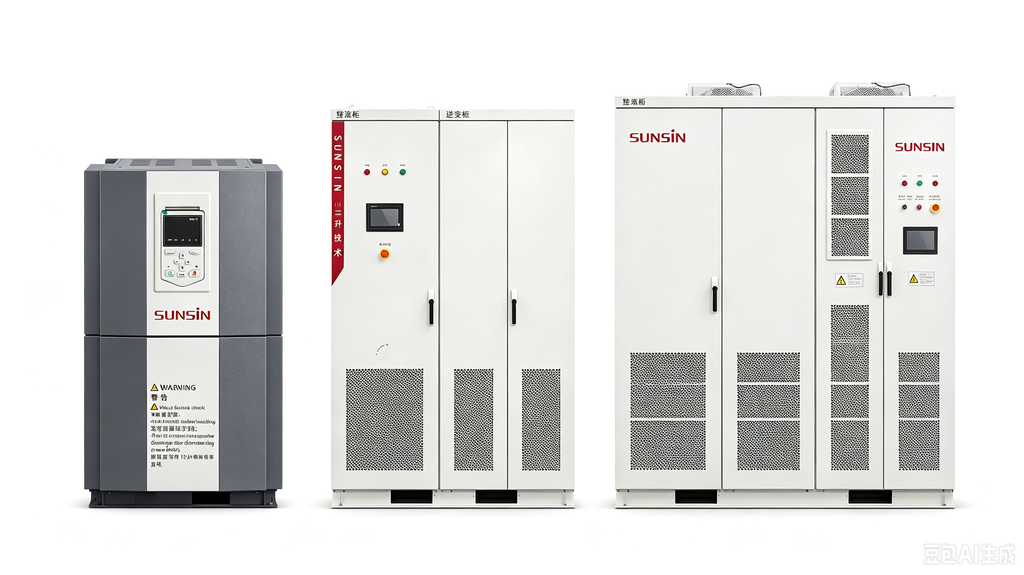
A properly selected industrial VFD can provide precise motor speed control, smoother starting and stopping, improved process control, and potential energy savings in suitable applications. On the other hand, an incorrectly sized VFD may result in overcurrent trips, overheating, unstable operation, insufficient starting torque, or premature equipment failure.
This guide explains the most important factors to consider when choosing a VFD for an industrial motor, from motor specifications and load characteristics to voltage, overload capacity, control mode, braking, and installation conditions.
What Is a VFD and Why Is It Used With Industrial Motors?
A Variable Frequency Drive (VFD) is an electronic motor controller that regulates the speed and torque of an AC motor by controlling the frequency and voltage supplied to the motor.
For industrial applications, VFDs are commonly used with induction motors and other compatible AC motors to control equipment such as:
- Pumps
- Fans
- Conveyors
- Compressors
- Crushers
- Mixers
- Hoists
- Extruders
- Industrial machinery
Without a VFD, an AC motor generally operates close to its rated speed when connected directly to the power supply. A VFD allows the motor speed to be adjusted according to the requirements of the production process.
For example, a pump does not always need to operate at full speed. A fan may need different airflow at different times. A conveyor may require controlled acceleration to reduce mechanical stress.
This makes VFD technology particularly useful for modern industrial motor control systems.
1. Check the Motor Nameplate First
The motor nameplate should be the starting point when selecting a VFD.
Important motor parameters include:
- Rated voltage
- Rated current
- Rated power
- Rated frequency
- Rated speed
- Power factor
- Motor efficiency
- Number of poles
- Insulation class
- Duty rating
The motor rated current is especially important.
Although VFD manufacturers often list products by kW or horsepower, the drive should ultimately be selected according to the motor’s actual operating current and application requirements.
For example, two motors with the same rated power may have different rated currents because of differences in voltage, efficiency and power factor.
Therefore:
Do not select a VFD based on motor kW alone.
Always compare the motor nameplate data with the VFD’s rated output current and application rating.
2. Match the VFD Voltage With the Motor
The VFD’s output voltage must be compatible with the motor.
Common industrial voltage classes include:
- 220V
- 380V
- 400V
- 415V
- 460V
- 480V
- 600V
- 660V
- 690V
- 1140V
- 3kV
- 6kV
- 10kV
For high-power industrial applications, medium voltage VFDs are commonly used with motors operating at several kilovolts.
For example, a 6kV industrial motor requires a suitable 6kV-class drive system, while a 10kV motor requires a drive designed for the corresponding voltage class.
Voltage compatibility involves more than simply matching numbers. The motor insulation system, electrical distribution network, transformer, switchgear and protection system should also be considered.
For large industrial installations, the VFD should therefore be selected as part of the complete electrical system.
3. Determine the Motor Power and VFD Rating
After checking voltage and current, determine the motor’s power rating.
Industrial VFDs are commonly specified in:
- kW
- HP
- Rated output current
- Overload capability
For example, a 75 kW motor may require a VFD with an appropriate 75 kW rating, but the final selection depends on the load and operating conditions.
A motor driving a fan may have different VFD requirements from a motor driving a conveyor or crusher, even if both motors have the same power rating.
This is why manufacturers often provide different VFD ratings for different duty classes.
When selecting an industrial VFD, check:
Motor Power + Motor Current + Load Type + Overload Requirement
rather than relying on motor power alone.
4. Identify the Load Type
Understanding the mechanical load is one of the most important steps in VFD selection.
Industrial loads can generally be divided into different categories according to their torque and speed characteristics.
Variable Torque Loads
Typical variable torque applications include:
- Centrifugal pumps
- Centrifugal fans
- Blowers
For these applications, the torque requirement generally changes with speed.
VFD speed control can be particularly useful because the equipment does not always need to operate at full speed.
Constant Torque Loads
Typical constant torque applications include:
- Conveyors
- Mixers
- Extruders
- Positive displacement pumps
- Material handling equipment
These applications may require substantial torque across a wide speed range.
The VFD may therefore need a higher overload capability and a control mode suitable for demanding torque requirements.
High-Inertia Loads
Some machines have significant rotating inertia.
Examples include:
- Large fans
- Centrifuges
- Flywheel systems
- Large conveyors
- Certain industrial process machines
These applications require careful consideration of acceleration and deceleration time.
5. Check the Required Starting Torque
Starting torque is particularly important for heavy-duty industrial applications.
A conveyor carrying material, for example, may require significantly more torque during startup than during normal operation.
Similarly, crushers, hoists and other heavy mechanical systems may have demanding starting conditions.
When selecting a VFD, determine:
- Required starting torque
- Acceleration time
- Load inertia
- Starting frequency
- Maximum operating torque
- Overload duration
A VFD with insufficient torque capacity may cause an overcurrent fault or fail to accelerate the motor properly.
For demanding applications, sensorless vector control or closed-loop vector control may be considered instead of basic V/F control, depending on the required performance.
6. Choose the Appropriate VFD Control Method
The control method determines how the VFD manages motor voltage, frequency and torque.
Two common approaches are:
V/F Control
V/F, or voltage/frequency control, is a relatively simple control method.
It can be suitable for applications such as:
- Fans
- Pumps
- Simple conveyors
- General-purpose machinery
Vector Control
Vector control provides more advanced control of motor torque and speed.
It can be considered for applications requiring:
- Higher starting torque
- Better low-speed performance
- Faster dynamic response
- More precise speed control
For example, heavy conveyors, hoists and certain process machines may require more advanced motor control.
The correct control method depends on the application rather than simply choosing the most advanced option available.
7. Consider the Required Speed Range
Not every industrial motor needs the same speed range.
Before selecting the VFD, determine:
- Minimum operating speed
- Normal operating speed
- Maximum operating speed
- Continuous low-speed operation
- Required speed accuracy
For example, a pump may only need to operate between 50% and 100% speed, while a production machine may require a much wider speed range.
Low-speed operation also needs to be evaluated carefully because motor cooling, torque production and mechanical characteristics can change as motor speed decreases.
The VFD and motor should therefore be considered together when designing a wide-speed-range system.
8. Evaluate Overload Capacity
Industrial motors may experience temporary overload conditions.
The required overload capacity depends heavily on the application.
For example:
Fans and pumps may have relatively predictable load characteristics.
Conveyors and crushers can experience sudden changes in mechanical load.
Hoists may experience demanding acceleration and braking conditions.
When comparing VFDs, check the manufacturer’s specifications for:
- Continuous output current
- Short-term overload current
- Overload duration
- Heavy-duty rating
- Normal-duty rating
A VFD that appears correctly sized based on motor power may not be suitable if the application requires significant short-term overload capability.
9. Consider Braking and Regenerative Requirements
Some industrial machines need controlled deceleration.
When a motor slows down, mechanical energy can be transferred back toward the drive.
Depending on the application, the system may require:
- Braking resistor
- Dynamic braking
- Regenerative braking
- Four-quadrant operation
Four-quadrant VFD systems are particularly relevant to applications where the motor frequently changes between motoring and braking conditions.
Examples can include:
- Mine hoists
- Cranes
- Elevators
- Certain conveyors
- High-inertia machinery
The braking method should be selected according to the machine’s actual operating cycle and energy requirements.
10. Check the Installation Environment
Industrial environments can be significantly different from standard indoor electrical rooms.
Before choosing a VFD, consider:
- Ambient temperature
- Humidity
- Dust
- Corrosive gases
- Altitude
- Vibration
- Cooling method
- Indoor or outdoor installation
- Enclosure protection rating
Mining environments, for example, may involve significant dust, vibration and temperature variations.
Marine and offshore environments can introduce additional challenges such as humidity and salt exposure.
The VFD enclosure and cooling system should therefore be selected according to the actual installation environment.
11. Consider Harmonics and Power Quality
Large industrial VFDs can have an impact on power quality.
When multiple high-power drives are installed in the same electrical system, harmonic distortion and power factor may need to be evaluated.
Depending on the system design, possible solutions can include:
- Multi-pulse rectification
- Active front-end technology
- Harmonic filters
- Multi-level inverter topology
- Appropriate transformer configurations
For medium voltage applications, three-level NPC inverter technology is one approach used in industrial drive systems.
A three-level topology can produce smaller voltage steps compared with a conventional two-level inverter, helping improve the output waveform and reduce voltage stress on switching devices.
For large industrial projects, harmonic analysis should be performed according to the actual electrical system rather than assuming that one VFD technology will fit every installation.
12. Think About Communication and Automation
Modern industrial VFDs are often integrated into larger automation systems.
Depending on the project, communication may include:
- RS485
- Modbus
- Ethernet-based protocols
- PLC communication
- SCADA integration
- Remote monitoring
Before purchasing a VFD, confirm that the drive can communicate with the existing control system.
For automated production lines, the ability to monitor parameters such as:
- Motor speed
- Output current
- Frequency
- Fault status
- Temperature
- Operating hours
can simplify system management and maintenance.
13. Consider Cable Length and Motor Compatibility
The distance between the VFD and motor can also influence the drive system design.
Long motor cables can introduce additional electrical effects, including reflected-wave voltage and increased capacitive current.
For long-distance installations, engineers may need to evaluate:
- Cable type
- Cable length
- Motor insulation
- Output reactor
- dv/dt filter
- Motor-side filtering
This becomes especially important for large industrial motors and medium voltage VFD systems.
A VFD should therefore be evaluated together with the motor cable and motor insulation system.
14. Calculate Total Cost, Not Just VFD Purchase Price
The lowest initial VFD price does not necessarily represent the lowest overall project cost.
Consider the complete system:
VFD + Transformer + Switchgear + Motor + Cable + Cooling + Installation + Maintenance
For industrial applications, other factors may also affect lifecycle cost:
- Energy consumption
- Maintenance requirements
- Spare parts availability
- Service support
- Expected operating hours
- Downtime cost
- Equipment lifespan
A drive with appropriate efficiency, protection and control capabilities may provide different lifecycle economics from a lower-cost drive with fewer features.
Therefore, VFD selection should consider both initial investment and long-term operating requirements.
Industrial VFD Selection Checklist
Before requesting a VFD quotation, prepare the following information:
Motor Information
- Motor voltage
- Motor power
- Motor current
- Rated frequency
- Rated speed
- Power factor
- Motor type
Load Information
- Pump, fan, conveyor, hoist, compressor or other load
- Starting torque
- Continuous torque
- Overload requirement
- Load inertia
- Acceleration time
- Deceleration time
Electrical Information
- Input voltage
- Grid frequency
- Short-circuit capacity
- Transformer information
- Cable length
- Existing switchgear
Environmental Information
- Ambient temperature
- Altitude
- Humidity
- Dust
- Vibration
- Indoor/outdoor installation
Control Requirements
- V/F or vector control
- Speed range
- PLC integration
- Communication protocol
- Local/remote operation
- Braking or regeneration
Providing this information allows the VFD manufacturer to recommend a more appropriate configuration.
What Size VFD Do I Need for My Motor?
There is no universal formula based only on motor horsepower or kW.
A basic starting point is to compare the motor’s rated current with the VFD’s continuous output current.
However, the final VFD size should also consider the application duty, overload requirements, starting torque, speed range and environmental conditions.
For example, a 100 kW conveyor motor may require a different VFD configuration from a 100 kW centrifugal pump motor.
Therefore, the correct question is not simply:
“What kW VFD do I need?”
Instead, ask:
“What VFD rating and control configuration are appropriate for my motor and load?”
This approach provides a much more reliable basis for industrial VFD selection.
When Should You Choose a Medium Voltage VFD?
For very high-power motors, medium voltage VFDs can be considered when the motor and electrical distribution system operate at medium voltage.
Typical applications include:
- Mining
- Oil and gas
- Steel production
- Power generation
- Water treatment
- Large pumping systems
- Mine ventilation
- Heavy material handling
Common medium voltage classes include approximately 3kV, 6kV and 10kV, depending on regional electrical standards and project requirements.
For example, a 6kV VFD and a 10kV VFD should be selected according to the motor voltage and electrical system rather than simply according to motor power.
Final Thoughts: How to Select the Right Industrial VFD
Choosing the right VFD for an industrial motor requires a system-level approach.
The most important factors include:
- Motor rated voltage
- Motor rated current
- Motor power
- Load type
- Starting torque
- Overload requirements
- Speed range
- Control method
- Braking requirements
- Installation environment
- Harmonic and power-quality requirements
- Communication and automation requirements
For standard pump and fan applications, the selection process may be relatively straightforward. For demanding applications such as mining conveyors, mine hoists, crushers, compressors and large industrial fans, a detailed engineering evaluation is usually necessary.
Sunsin provides industrial VFD and medium voltage drive solutions for demanding motor-control applications, including customized solutions based on motor specifications, load characteristics and project requirements.
If you are selecting a low-voltage, medium-voltage or high-power industrial VFD, providing complete motor and application data is the best first step toward selecting the appropriate drive system.
Frequently Asked Questions
How do I choose a VFD for an industrial motor?
Start with the motor nameplate and identify voltage, current, power, frequency and speed. Then evaluate the mechanical load, starting torque, overload requirements, speed range, control method, braking requirements and installation environment.
Should VFD power match motor power?
The VFD should be appropriately rated for the motor, but power matching alone is not sufficient. Motor current, load type, overload requirements and operating conditions also need to be considered.
Can one VFD control different motor sizes?
Some VFDs can operate with different motor ratings within their specified output-current range. However, the drive must be configured and sized according to the specific motor and application.
What type of VFD is best for a conveyor?
Conveyors often require high starting torque and controlled acceleration. A heavy-duty VFD with suitable overload capacity and an appropriate control method may be required.
What is the difference between V/F and vector control?
V/F control regulates the relationship between motor voltage and frequency and is suitable for many general applications. Vector control provides more precise torque and speed control and can be useful for demanding applications requiring stronger low-speed performance.
When do I need a medium voltage VFD?
Medium voltage VFDs are generally considered for high-power motors operating at medium voltage. Applications can include mining, oil and gas, steel, power generation, water treatment and large pumping systems.
How can I select the correct VFD rating?
Compare the motor’s rated current with the VFD’s continuous output current and then evaluate overload, starting torque, speed range, load type and environmental conditions. For large industrial projects, consult the VFD manufacturer with complete motor and application data.