
Anyone who has worked on mining retrofits knows how tricky it is to pick the right medium & high voltage VFD for mining industry. Many project teams simply match the motor power and order general-purpose medium voltage drives, only to face constant tripping, overheating and unexpected shutdowns once the unit goes underground.
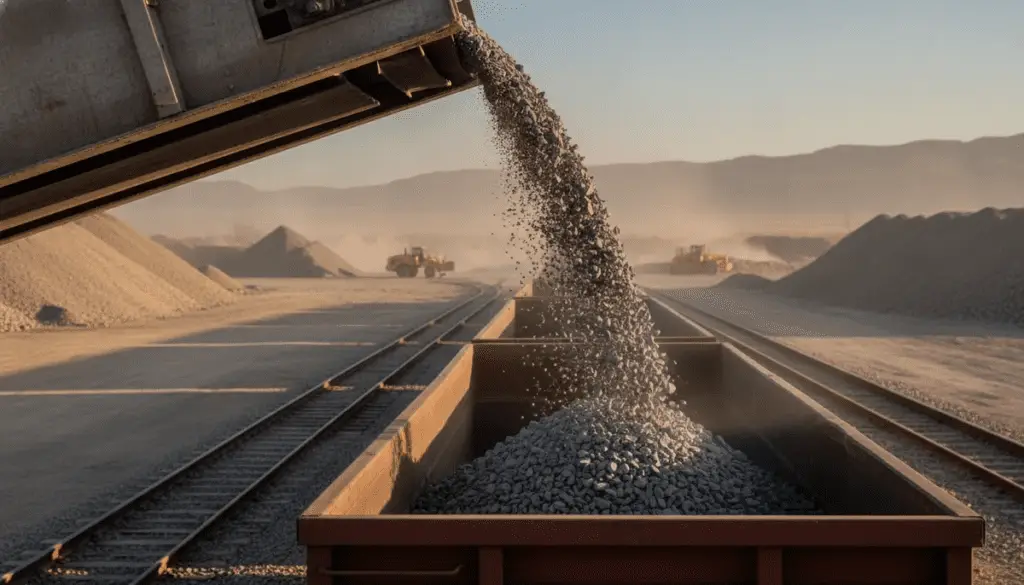
Mining sites do not have clean, stable conditions like ordinary factories. Coal dust, damp air, sharp load spikes and long hours of nonstop operation push industrial drives to their limits. A poorly selected VFD will run unstable, break down often and run up maintenance bills far larger than the money saved on the initial purchase.
Drawing on years of field experience with open-pit and underground coal and metal mines, this guide breaks down every practical factor you need to check before placing an order. We will walk you through parameter confirmation, load classification, topology selection and environmental protection settings, so you can avoid common costly mistakes.
1. Lock Down Basic Electrical Data Before Picking Capacity
Most selection errors start with careless power matching. Never choose a VFD model only by reading the power value printed on the motor nameplate. You need to collect real field data first.
First, confirm the exact grid voltage. Mining high-power motors mostly run on 3kV, 6kV or 10kV power supply. The rated voltage of the drive must match the local grid strictly. If the voltage grade does not line up, power modules will bear excessive voltage stress and break down after several months of continuous running. For remote mountain mines with unstable power grids, record long-term voltage fluctuation and leave enough tolerance for the main circuit.
Second, calculate running current rather than just rated power. Crushers, belt conveyors and mining hoisters create heavy impact current during startup. It is standard practice to size the VFD based on actual full-load current, with an extra 15% to 20% current margin. Without this buffer, the drive will hit over-current protection every time materials pile up on the conveyor.
Third, pay attention to long cable runs. Tunnels often stretch hundreds of meters, and long wiring brings capacitance current and waveform distortion. A three-level medium voltage VFD with smooth sine wave output can effectively reduce insulation aging caused by long-distance power transmission.
2. Divide Load Types and Match Overload Performance
Not all mining equipment works the same way. Fans run smoothly while conveyors face sudden jolts. Matching overload capability to load type is the key to stable operation of your medium & high voltage VFD for mining industry.
Variable torque load: Main fans and drainage pumps
Ventilation fans and underground water pumps operate steadily with little startup shock. A standard VFD with 120% overload for 60 seconds will work perfectly. The priority here is low harmonic output and energy efficiency.
Three-level NPC topology produces clean current waveforms, cuts motor heating, and allows stepless speed adjustment based on real demand. In most fan and pump retrofits, the energy saving rate can reach 25% to 35%.
Constant torque heavy load: Belt conveyors and crushers
Long-distance belt conveyors and ore crushers belong to heavy constant-torque equipment. They need high starting torque and cope with sudden blockage caused by bulk materials. Ordinary general VFDs cannot stand frequent impact loads.
You must choose heavy-duty industrial drives that support 150% overload within 60 seconds, together with low-frequency high-torque control to prevent stalling during startup.
For downhill conveyors, inertial movement generates large regenerative power. Two-quadrant drives will keep triggering overvoltage faults, so you need a four-quadrant regenerative VFD to send excess energy back to the grid smoothly.
Hoisting equipment: Mine hoists
Hoisters require frequent forward and reverse switching, with strict standards for speed stability and braking safety. You need a closed-loop vector medium & high voltage drive with fast dynamic response. Complete protection against overcurrent, overvoltage and overspeed is essential to avoid safety accidents underground.
3. Choose Three-level NPC Topology for Harsh Underground Conditions
Two types of medium & high voltage VFD dominate the market: two-level topology and three-level neutral point clamped topology. For mining environments, three-level NPC drives have become the mainstream choice on most formal projects.
Two-level inverters produce large voltage jumps during switching. Each power component bears the full DC bus voltage, leading to high failure rates on weak underground power grids.
The three-level design adds a zero-potential output state, which makes the waveform far closer to a sine wave. Each IGBT only takes half of the total bus voltage stress, greatly lowering the risk of breakdown.
The low-harmonic feature brings another practical benefit: less interference with underground sensors and protection instruments. Most coal mine safety audits impose strict limits on grid harmonic distortion. Three-level medium voltage drives can easily meet power quality requirements without adding extra filters, simplifying the whole system and cutting extra costs.
4. Focus on Cabinet Protection and Anti-interference Design
This detail is often overlooked but decides how long your VFD can last underground. General open-frame drives built for indoor workshops will not survive in mining tunnels filled with coal dust and moisture.
The cabinet should adopt fully sealed structure with a protection grade no lower than IP54. All circuit boards must go through three-proof coating against dampness, mildew and corrosive gas. Without dustproof and moistureproof treatment, dust will block radiators and cause short circuits within just a few months.
Besides physical protection, underground power systems suffer heavy electromagnetic interference from large equipment. Mining-specified medium voltage drives need built-in EMC components to shield signal disturbance and prevent parameter loss caused by voltage surges.
5. Harmonic Suppression and Weak Grid Adaptability
Power supply in remote mining areas is usually unstable, and power companies often carry out strict harmonic assessment. Poor power quality will heat up transformers and disturb measuring instruments across the whole mining area.
Three-level NPC VFD uses optimized SVPWM modulation to keep current distortion below 5%. Most fan and pump projects can skip passive harmonic filters entirely. If the local grid fluctuates violently, pick a drive with built-in input reactor to resist voltage surges and dips, and reduce unnecessary tripping.
For four-quadrant regenerative conveyors, the active rectifier keeps the power factor close to 1 while feeding energy back, without polluting the public power grid.
6. Look Beyond Price: Evaluate Total Lifecycle Cost and After-sales
Many purchasing teams only compare upfront prices. But mining equipment runs nonstop all year long. If the VFD fails, the whole production line shuts down, and downtime losses far exceed the price gap between different brands.
Work with manufacturers with independent R&D and strict industrial testing. Every mining VFD should pass full-load aging, high-low temperature and vibration tests before delivery to guarantee low failure rates. Avoid cheap assembled units without field verification.
Spare parts supply and local after-sales matter more for remote mines. Confirm that the supplier maintains local spare parts inventory and can send technicians on site quickly to minimize production pause.
7. Quick Configuration Reference for Common Mining Machines
- Main fans & drainage pumps: Standard three-level NPC medium & high voltage VFD, low harmonic energy-saving model.
- Belt conveyors & crushers: Heavy-duty three-level drive with 150% overload; downhill types adopt four-quadrant regenerative structure.
- Mine hoists: Closed-loop vector four-quadrant VFD with full safety protection.
- Underground fixed equipment: IP54 sealed cabinet with anti-corrosion circuit coating.
Conclusion
Selecting a qualified medium & high voltage VFD for mining industry is more than just matching power values. You need to consider grid stability, load characteristics, topological structure, environmental protection, harmonic control and after-sales support as a whole.
SUNSIN designs heavy-duty three-level VFDs exclusively for coal mines and metal mines. Our drives go through strict environmental and load testing to adapt to dusty, round-the-clock operation. We deliver customized frequency conversion solutions for conveyors, fans, pumps and hoisting equipment for mining projects worldwide.